What do you think separates us from programmers that came before us, say those from the 70’s , the 80’s or the 90’s?
Consider Donald Knuth, a legendary programmer and book writer of the Academic master piece,The Art Of Computer Programming,a multi volume book. After writing the first three volumes, Knuth paused writing in 1977 to create his own typesetting engine because existing systems produced output he considered unacceptable for his books. Knuth took what he thought would be about a year break from writing to create , his digital typesetting engine. That one year turned into a little over 10 years that redefined digital typography. Leslie Lamport built a layer on top of it creating making it usable for the rest of us. history of TeX
So back in the day, memory was expensive.Like ridiculously expensive. Compute time was expensive. Every byte mattered, every second of compute counted.
Take an example of the 1980’s where memory was 20$ per 1KB. That means to purchase just 1MB of memory you needed about 20,000$ (UGX 78M), enough money to buy a Mazda CX today.
Before time sharing systems were a popular thing, there existed batch processing systems and punch cards. You didn’t type code directly into a computer. You wrote it out by hand on special paper (code sheet) and then used a mechanical keypunch machine to punch holes (rectangular holes by the way) into a deck of cards each representing a single line of code. You would then hand your deck of cards to a computer operator and wait in line. Depending on how busy the mainframe was, it could take hours or even a full day to get your results back.If you made a single typo, like a missing comma,the compiler would fail instantly. You wouldn’t find out until you picked up your printout hours later. Reading the printout alone could take a while as it was continuous fan fold paper since the main frame had no screen for output. You then had to find the bad card (basically debugging but with pencil, paper and probably a colleague), re-punch it, swap it into the deck, and submit the job all over again. As a student doing computer science, you would be handed a set ration of cards at the start of the semester, and if you ran out due to making too many coding mistakes, you had to buy more from the university bookstore. coding in the 70’s
It was for these restrictions that programmers had to mentally dry run their code first before coding (punching the cards).
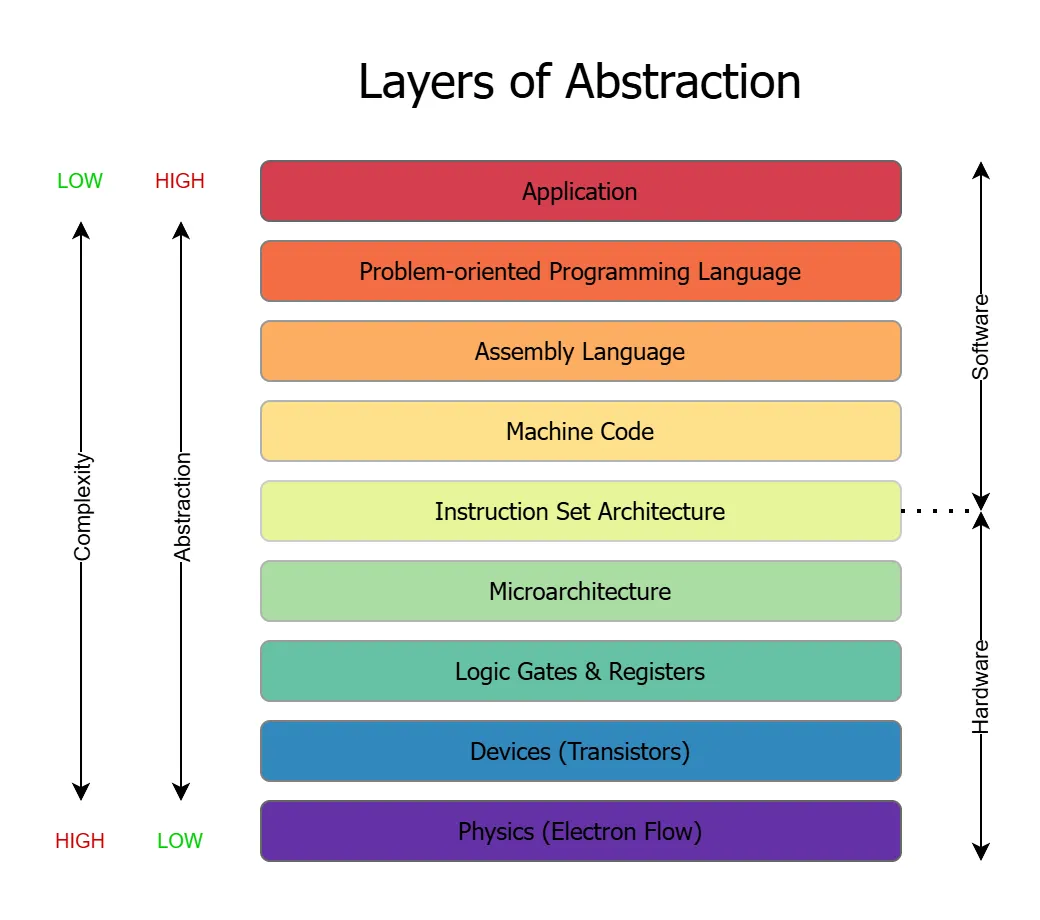
My view of the history of programming is one of layers built on top of each other. Programming was so hard and time consuming back in the day that the programmers themselves decided to makes life easy by abstracting away the repetitive, boring and complex steps. Today the abstraction depth is so enormous that most programmers never touch anything close to the bare metal. The Answer to almost any problem are just a google search away. Large language models now absorb even the search step. A framework now does in a single line what would take weeks to correctly build in the 80’s.
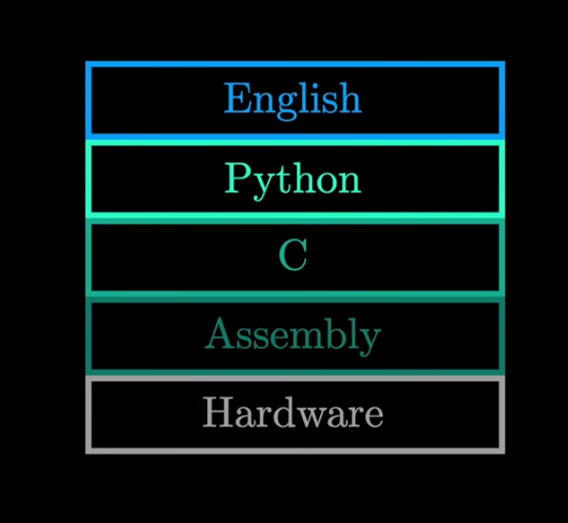
Figure 1: At what layer do you spend most of your time?.
So what separates us? The programmers back then had less leverage and more forced depth and we today have more leverage but optional depth and that is the trap. We are at a point where we no longer need to understand to build. The programmers today that become Knuth tier are the ones who seek depth anyway when nothing is forcing them to.
Not saying all programmers in the 80’s were cracked because of the forced depth. There are things that have not changes even over the years. Algorithmic thinking is still the same problem it was, has not become any simpler and bad programmers in the 80’s wrote bad software. Bad programmers today also write bad software just faster and on a larger scale.
Today, you have two choices, you either choose to build faster or understand better.
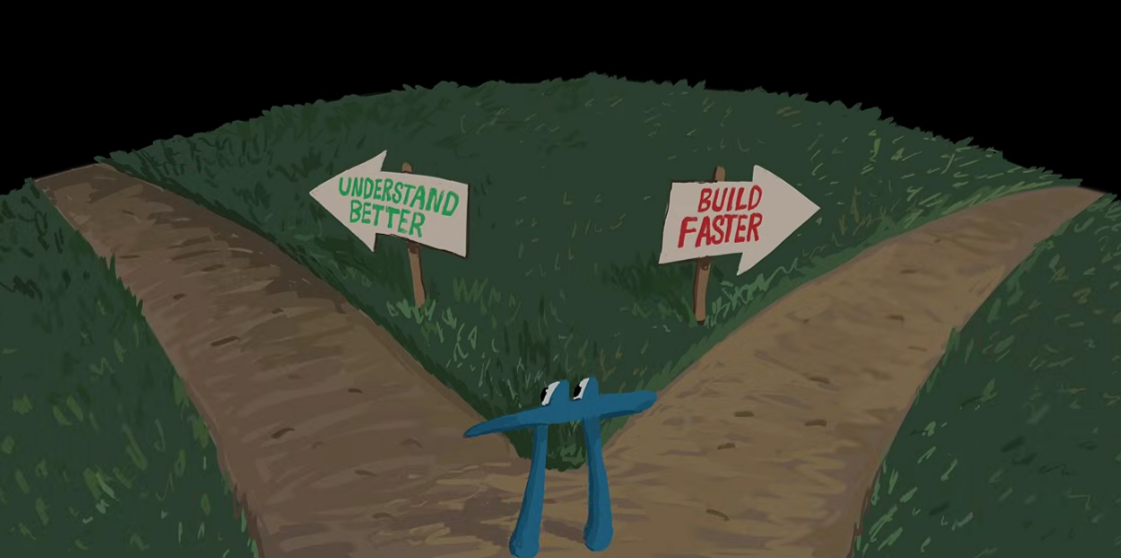
But I totally agree with Grant Sanderson, a youtuber, mathematician and creator of MANIM python library when he said that, “It is so satisfying to understand how something works”. Sometimes you just need to go a little bit slower and understand the ground on which you are building on. Build less and understand a bit more. The benefits you get from the rigorous thinking you apply along the way is a long term investment in your self. I recommend you watch his keynote speech at the HackMIT hackathon.
So, this article ought to act as a rationale for why I created this blog and my youtube channel, peeling abstractions. I wish to share my views, my knowlegde, explanations and understanding, my learning journey, my interests in this academic path with yall whilst peeling away the abstractions that have been built over the years layer by layer.